Signs of rheumatoid arthritis in early stages are often subtle and easily dismissed as general aches or tiredness. Recognising them early is one of the most important things you can do — early DMARD treatment significantly reduces joint damage and improves long-term outcomes.
Quick answer: Early signs of RA include: symmetrical swelling in small hand/foot joints, morning stiffness lasting over 30-60 minutes, profound fatigue and flu-like malaise. See your GP urgently if symptoms persist over 6 weeks — NICE recommends rheumatology referral within 3 working days.
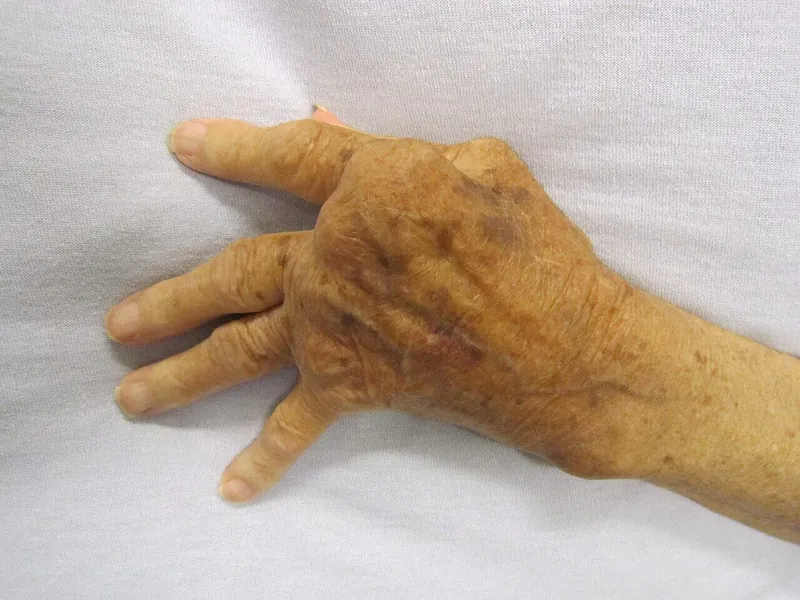
Rheumatoid arthritis — openly licensed via Openverse
The Classic Early Warning Signs
Symmetrical Joint Swelling
RA typically begins in the small joints of the hands and feet — the knuckle joints (MCPs), middle finger joints (PIPs) and the joints at the balls of the feet (MTPs). The key distinguishing feature is symmetry: both wrists, both sets of knuckles. If your right hand is affected, your left usually is too.
Prolonged Morning Stiffness
Morning stiffness lasting more than 30–60 minutes — often described as hands feeling "locked" or "wrapped in bandages" — is a cardinal early sign of RA. This distinguishes it from osteoarthritis, where stiffness typically resolves within 30 minutes.
Fatigue and Flu-Like Malaise
Many people with early RA report profound fatigue before joint symptoms become prominent. Low-grade fever, loss of appetite and general unwellness are caused by the same inflammatory cytokines attacking the joint lining.
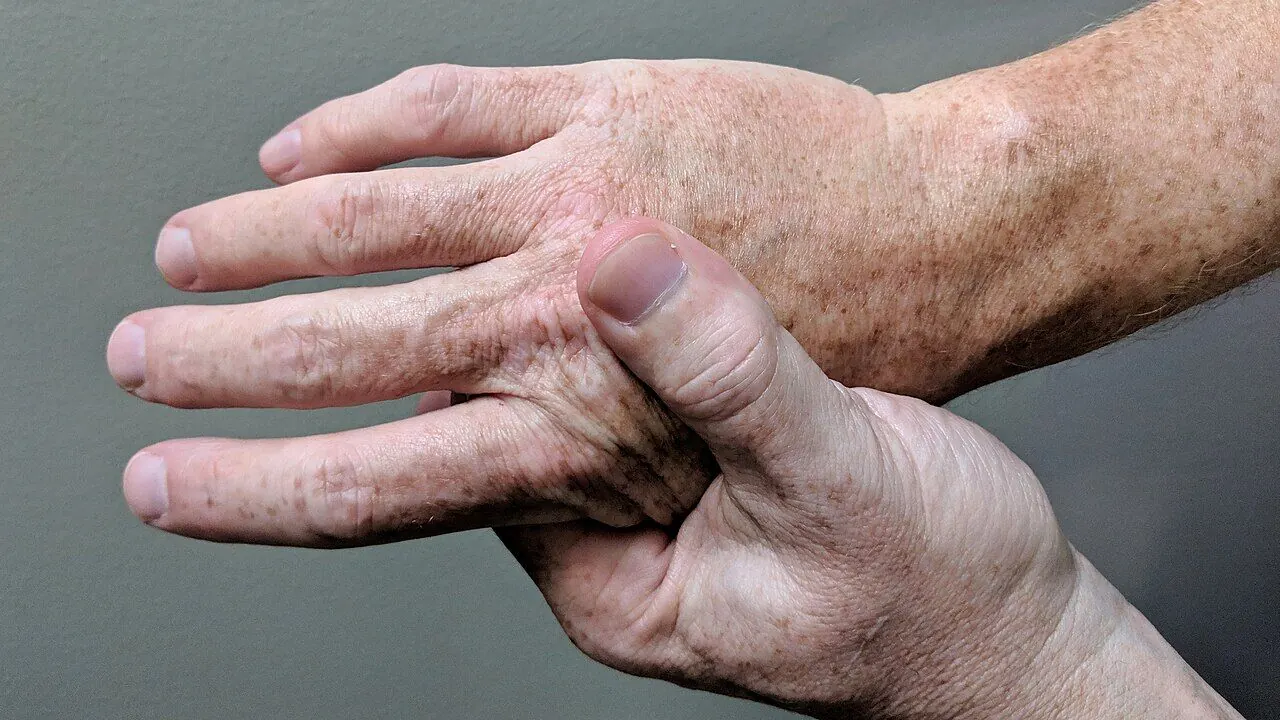
Arthritic hand changes — openly licensed via Openverse
Blood Tests Used in Early RA
Your GP will typically test for: CRP and ESR (inflammatory markers), rheumatoid factor (RF) and anti-CCP antibodies. Crucially, up to 30% of early RA is seronegative — blood tests may be normal. A negative test does not rule out RA if clinical features are present.
What to Do If You Recognise These Signs
If you have had persistent swelling or stiffness in small hand or foot joints for more than six weeks, see your GP as soon as possible. NICE guidance recommends urgent referral to rheumatology within three working days for suspected inflammatory arthritis.

Early assessment — openly licensed via Openverse
Q&A
Question: How quickly does RA progress if untreated?
Short answer: Joint erosion can begin within weeks to months of symptom onset in untreated RA. This is why early DMARD treatment is so important.
Question: Can RA start at any age?
Short answer: Yes — RA can start at any age including childhood. Peak adult onset is between 40 and 60 years.
Practical next steps for Signs of Rheumatoid Arthritis in Early Stages
If you came here about Signs of Rheumatoid Arthritis in Early Stages, pick one change you can keep for a fortnight rather than overhauling everything at once. Note what hurts, what helps, and what you have already tried, then take that list to your GP, rheumatology nurse or physiotherapist so the conversation stays concrete.In many areas you can ask your primary care network about self-referral to physiotherapy or lifestyle support without waiting for a hospital letter. Check your GP surgery website or the NHS App for the route that applies where you live.
Reliable UK sources
Cross-check major decisions with NHS.uk, your clinical team, and NICE guidance summaries where relevant. Be wary of social posts that promise reversal of arthritis or attack standard medicines without evidence.
Making information usable
Treat articles like this as a starting map, not a personal care plan. Highlight one idea to try for two weeks, then review. If symptoms are new, rapidly worsening, or affecting several joints with fever or unexplained weight loss, contact your GP promptly rather than waiting on self-help alone.
Preparing for appointments
Write three priorities before you go: main symptom, functional limit (stairs, sleep, work), and the question you most need answered. Bring a current medicine list including over-the-counter products. If English is not your first language, request an interpreter when you book.
Quick questions about Signs Rheumatoid Arthritis Early
Is this a substitute for seeing a clinician? No. Use it to prepare questions and understand options, then confirm decisions with your NHS team.How long before I judge whether a change helped? Give most habit or exercise changes at least two to four weeks, unless pain or swelling clearly worsens — in that case scale back sooner.
What should I track? Joint pain (0–10), morning stiffness time, sleep quality, and how far you can walk or how long you can type or stand. Patterns beat one-off ratings.
Safety and when to get urgent help
This page is general information for people in the United Kingdom, not personal medical advice. Seek urgent help via NHS 111 or A&E if you have sudden inability to move a joint, hot swollen joint with fever, chest pain, severe shortness of breath, or symptoms that feel immediately dangerous.
Keep learning with us
Explore related guides on Living With Arthritis — try the guides hub, diet hub, exercise hub, or site search to filter by topic and length. If benefits or work questions are on your mind, start at the Benefits & PIP hub.
Keep expectations kind while you work on signs of rheumatoid arthritis in early stages. Arthritis symptoms fluctuate; a quieter week does not mean you imagined earlier pain, and a flare does not mean every helpful habit has failed. Adjust one variable at a time so you can see what truly helps.
Continue reading
- Psoriatic Arthritis vs Rheumatoid — When comparing psoriatic arthritis vs rheumatoid arthritis, the main differences lie in which joints are affected and the presence of.
- Tai Chi for Arthritis Joint Pain: Benefits and Evidence — Systematic reviews consistently show tai chi reduces arthritis pain and improves balance, function and mental wellbeing.
- Early Signs of Gout in the Big Toe UK — Recognising the early signs of gout in the big toe — what it feels like, how to confirm diagnosis and what to do at first attack.
- Osteoarthritis Symptoms UK – Signs & When to See a GP — Recognise osteoarthritis symptoms early.