Psoriatic arthritis (PsA) and rheumatoid arthritis (RA) are both inflammatory arthritis conditions but they have distinct causes, patterns and treatments. Understanding the differences helps you ask the right questions and access the right care.
Quick answer: Psoriatic arthritis is linked to psoriasis and can be asymmetric, affecting DIP joints and causing nail changes. Rheumatoid arthritis is symmetrical, seronegative in 20-30%, and does not cause skin changes. Both are treated with DMARDs but biologic choices differ.
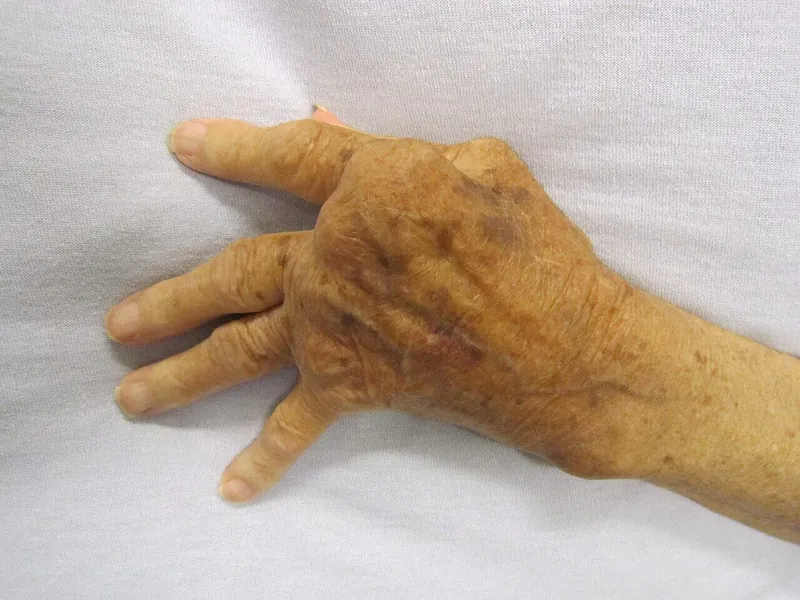
Inflammatory arthritis — openly licensed via Openverse
What They Have in Common
Both PsA and RA are autoimmune conditions — the immune system attacks the body's own tissues. Both cause joint inflammation, pain, swelling and morning stiffness. Both can affect multiple joints and both are treated with disease-modifying antirheumatic drugs (DMARDs) including biologics. Both require specialist rheumatology management.
Key Differences
Cause and Association
PsA is directly associated with psoriasis — around 1 in 3 people with psoriasis develop PsA. RA is not associated with skin conditions. RA is associated with specific blood markers (rheumatoid factor, anti-CCP antibodies) in 70–80% of cases. PsA typically tests negative for these markers.
Joint Pattern
RA characteristically affects joints symmetrically — both wrists, both knuckles, both MTPs. PsA can be asymmetric and often involves the DIP joints (fingertip joints) — which are typically spared in RA. PsA can also cause spondylitis (spinal inflammation) and dactylitis (sausage fingers/toes).
Skin and Nail Changes
PsA is associated with psoriasis plaques and nail changes (pitting, ridging, onycholysis). RA has no characteristic skin changes, though rheumatoid nodules can occasionally form.
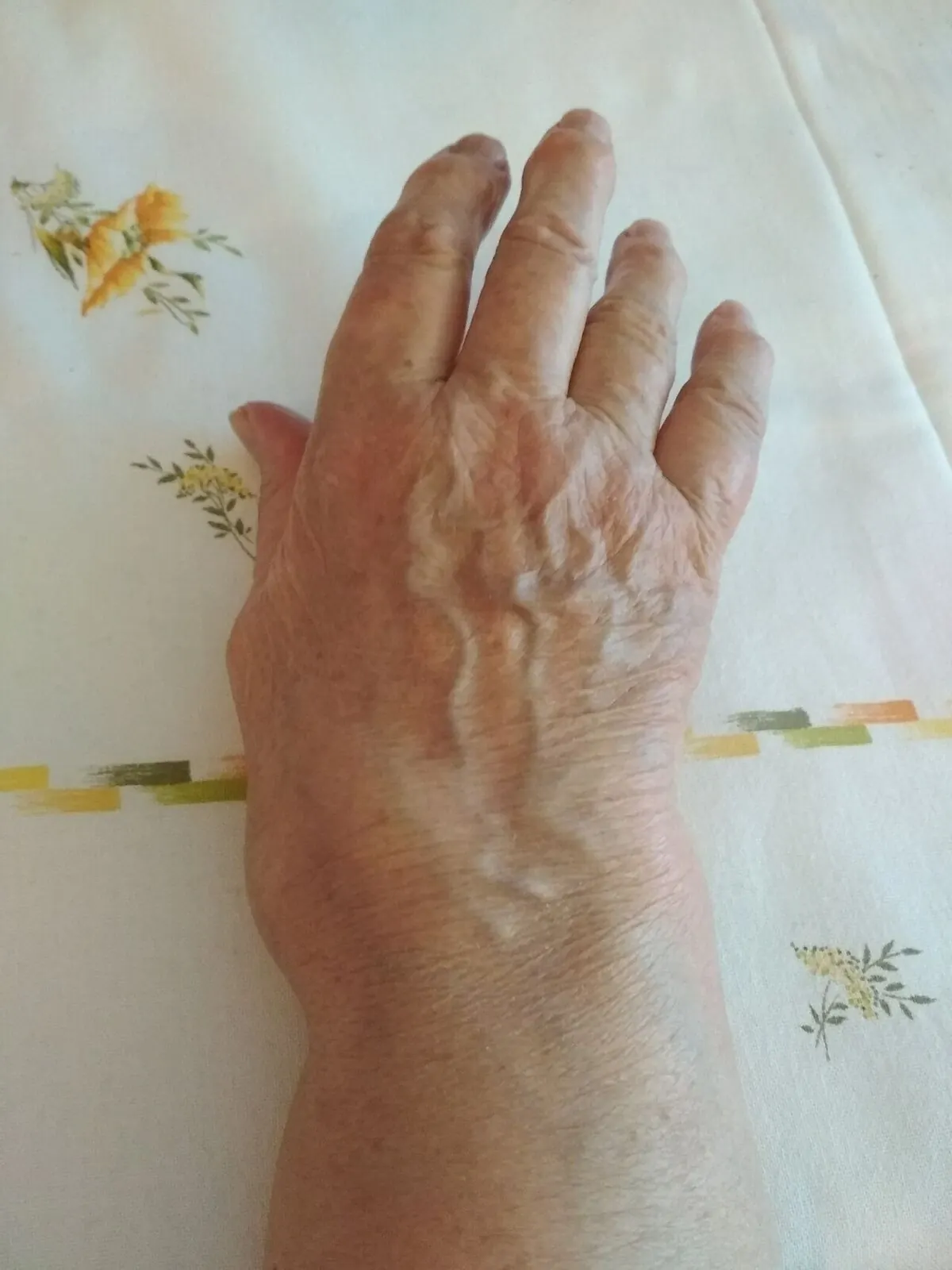
Hand joint changes in inflammatory arthritis — openly licensed via Openverse
Treatment Differences
Both conditions start with conventional DMARDs (methotrexate is first-line for both). However, biologic choices differ: IL-17 inhibitors (secukinumab, ixekizumab) are highly effective for PsA and its skin component but less commonly used in RA. JAK inhibitors are licensed for both. The skin and joint components of PsA are managed together, which simplifies treatment in some cases.

Specialist assessment — openly licensed via Openverse
Q&A
Question: Can I have both PsA and RA?
Short answer: Having both is theoretically possible but rare. Most people with psoriasis and joint disease have PsA. A rheumatologist can distinguish between them with blood tests and clinical examination.
Question: Which is more severe — PsA or RA?
Short answer: Both can range from mild to severe. Neither is inherently "worse" — outcome depends on early diagnosis and effective treatment more than the specific diagnosis.
Practical next steps for Psoriatic Arthritis vs Rheumatoid Arthritis: Key Differences
If you came here about Psoriatic Arthritis vs Rheumatoid Arthritis: Key Differences, pick one change you can keep for a fortnight rather than overhauling everything at once. Note what hurts, what helps, and what you have already tried, then take that list to your GP, rheumatology nurse or physiotherapist so the conversation stays concrete.In many areas you can ask your local integrated care board about self-referral to physiotherapy or lifestyle support without waiting for a hospital letter. Check your GP surgery website or the NHS App for the route that applies where you live.
Making information usable
Treat articles like this as a starting map, not a personal care plan. Highlight one idea to try for two weeks, then review. If symptoms are new, rapidly worsening, or affecting several joints with fever or unexplained weight loss, contact your GP promptly rather than waiting on self-help alone.
Reliable UK sources
Cross-check major decisions with NHS.uk, your clinical team, and NICE guidance summaries where relevant. Be wary of social posts that promise reversal of arthritis or attack standard medicines without evidence.
Finding people who understand
Local arthritis groups, hospital patient panels and moderated online communities can reduce isolation. Ask your rheumatology nurse, library, or council adult social care pages for current lists. Choose spaces that feel practical and kind; leave any that push unproven cures or shame medication use.
Quick questions about Psoriatic Arthritis Rheumatoid Arthritis
Is this a substitute for seeing a clinician? No. Use it to prepare questions and understand options, then confirm decisions with your NHS team.How long before I judge whether a change helped? Give most habit or exercise changes at least two to four weeks, unless pain or swelling clearly worsens — in that case scale back sooner.
What should I track? Joint pain (0–10), morning stiffness time, sleep quality, and how far you can walk or how long you can type or stand. Patterns beat one-off ratings.
Safety and when to get urgent help
This page is general information for people in the United Kingdom, not personal medical advice. Seek urgent help via NHS 111 or A&E if you have sudden inability to move a joint, hot swollen joint with fever, chest pain, severe shortness of breath, or symptoms that feel immediately dangerous.
Keep learning with us
Explore related guides on Living With Arthritis UK — try the guides hub, diet hub, exercise hub, or site search to filter by topic and length. If benefits or work questions are on your mind, start at the Benefits & PIP hub.
Keep expectations kind while you work on psoriatic arthritis vs rheumatoid arthritis: key differences. Arthritis symptoms fluctuate; a quieter week does not mean you imagined earlier pain, and a flare does not mean every helpful habit has failed. Adjust one variable at a time so you can see what truly helps.
Continue reading
- Psoriatic Arthritis vs Rheumatoid — When comparing psoriatic arthritis vs rheumatoid arthritis, the main differences lie in which joints are affected and the presence of.
- Osteoarthritis vs Rheumatoid Arthritis — Key Differences — Confused about OA and RA?
- Juvenile Arthritis UK – Parent's Guide to Symptoms & Care — Comprehensive UK guide to juvenile idiopathic arthritis (JIA).
- Hip Arthritis Symptoms UK – Signs, Diagnosis & Treatment — Recognise hip arthritis symptoms early.